

What is the real ROI of safety? It isn’t the hardware. It’s the incidents that don’t happen, the data that changes how you work and the trust that makes a system stick.
By Jackson Phillips, Account Manager, Matrix Design Group
Key Takeaways
- The ROI of safety comes from avoided incident costs: the National Safety Council puts the average medically consulted work injury at $48,000.
- Hidden costs such as downtime, equipment damage, overtime and higher premiums often exceed the direct cost of an injury.
- AI-powered collision avoidance captures near-miss data, turning lagging indicators into leading indicators you can act on.
- Implementation drives return: validate in live operations, plan to scale, earn operator buy-in and put the data to work.
- Measure a baseline before installing, then compare at 90 days, six months and one year.
When I sit down with safety and operations leaders, the conversation almost always turns to the same question: “How do I justify this to finance?” It’s a fair question. Collision avoidance and pedestrian detection systems are a capital investment, and every dollar competes with production equipment, staffing and maintenance.
But I’ve found that the organizations getting the most value from safety technology ask a different question. Instead of “What does this cost?” they ask, “What is it costing us not to have it?”
The ROI of Safety Starts With the Cost of Doing Nothing
The numbers are hard to ignore. The National Safety Council estimates that work injuries cost the U.S. $181.4 billion in 2024. That works out to roughly $48,000 for each medically consulted injury and $1.54 million for each workplace death. Those injuries also cost 102 million days of lost work.
Liberty Mutual’s 2025 Workplace Safety Index puts employers’ direct costs for serious injuries at about $58.7 billion a year. Being struck by objects or equipment ranks among the leading causes.
And those figures only capture part of the picture. Behind every incident are costs that never show up on a workers’ comp claim:
- Equipment damage and repairs
- Production downtime while an area is shut down and investigated
- Overtime and temporary labor to cover the injured worker
- Product loss and missed shipments
- Higher insurance premiums
- The toll on morale, retention and recruiting
When you add it up, a single serious forklift or mobile equipment incident can erase the cost of a safety system many times over.
Why Lagging Indicators Undersell the ROI of Safety
The challenge with traditional safety ROI is that it relies on lagging indicators. You count injuries after they happen. If your numbers are low, it’s easy to assume your risk is low too.
That’s where connected safety technology changes the equation. As I discussed in an Occupational Health & Safety webinar on AI-powered forklift safety, today’s collision avoidance systems don’t just alert an operator. They capture data on every near miss: where it happened, what time, which equipment and under what conditions.
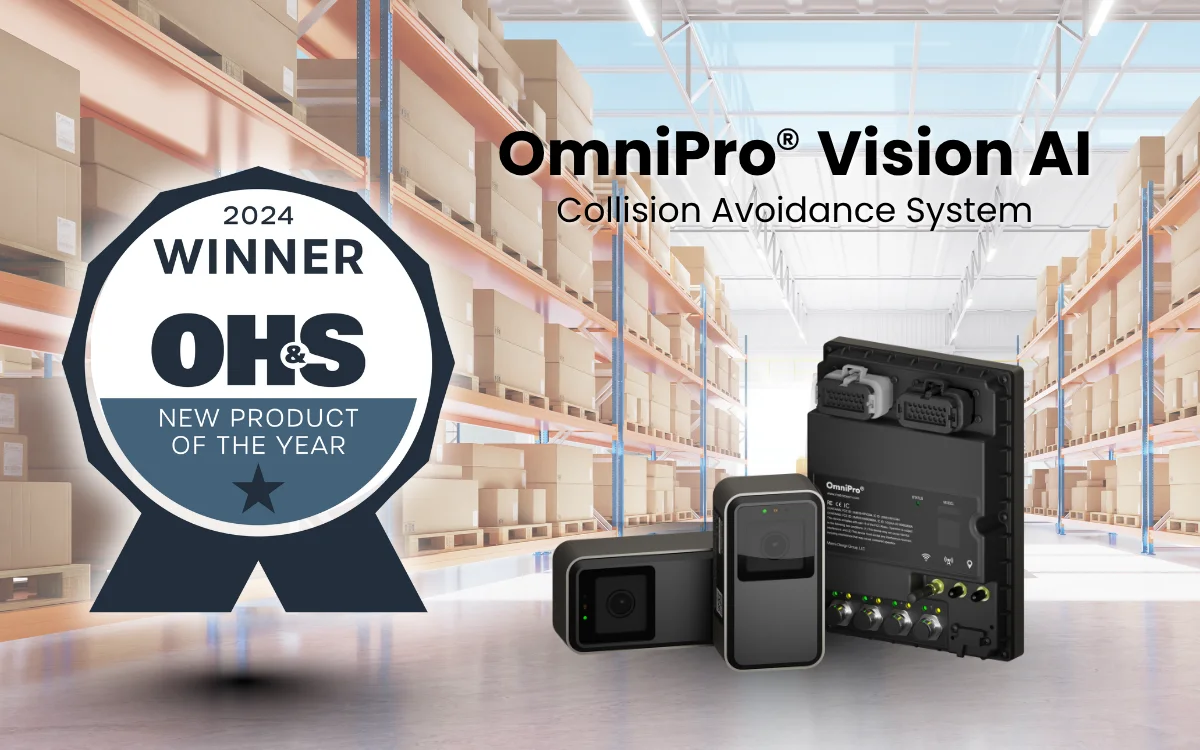
That data turns invisible risk into something you can see and fix. As my colleague Karly Broerman shared in a recent Matrix Executive Q&A, one forklift kept logging pedestrian detections at the same time every day. The data showed its route crossed a heavy foot traffic area. A simple workflow adjustment reduced that exposure without adding headcount or slowing production.
That’s ROI too. It’s just harder to put on a spreadsheet unless you’re measuring it.
Productivity and Safety Aren’t a Trade-Off
One of the biggest misconceptions I hear is that safety technology slows operations down. If a system creates constant nuisance alerts, operators lose trust in it, ignore it or find ways around it. At that point you’ve paid for a system that isn’t protecting anyone.
The right system is precise. It alerts when there’s a real hazard and stays quiet when there isn’t. Configurable caution and alert zones let you match the system to the way your site actually runs. When done right, safety and productivity reinforce each other. Operators move with more confidence, and leaders spend less time managing incidents and more time improving operations.
Why the ROI of Safety Depends on Implementation
Here’s something I emphasize in every conversation: collision avoidance isn’t just about the technology you put on a forklift. The return you get depends on how you validate, deploy and scale it.
I’ve covered these practices in more detail in Safety+Health Magazine and on the EHS on Tap podcast. Here’s the short version:
Validate in the real world. Controlled demos don’t reflect the variability of a live operation. Test across multiple shifts and conditions, and focus on the areas where risk is highest.
Plan to scale from day one. A successful pilot only pays off if it can become a plant-wide or enterprise-wide standard. Use a consistent validation and implementation framework so each new site doesn’t start from scratch.
Earn buy-in at every level. Leadership support gets a system funded, but operator buy-in determines whether it works. Involve operators early, explain what the system does and doesn’t do, and position it as a tool that supports them, not surveillance.
Put the data to work. Connected systems generate a lot of information. It only creates value with clear ownership, consistent processes and defined goals. Review trends regularly and use them to guide coaching, layout changes and workflow decisions.
Choose a partner, not a vendor. Connected safety isn’t “set it and forget it.” Conditions change, fleets grow and processes evolve. Work with a provider who will help you refine and expand your system over time.
How to Measure the ROI of Safety
If you’re building the business case, track metrics that show both prevention and performance:
- Recordable incidents and lost-time injuries
- Near-miss frequency and location trends over time
- Equipment damage and repair costs
- Unplanned downtime tied to incidents
- Insurance and workers’ comp costs
- Operator adoption and system uptime
Capture a baseline before you install, then compare at 90 days, six months and one year. That gives finance the evidence it needs, and it gives your safety team a clear picture of what’s working.
The Bottom Line
Safety investments pay off in incidents that never happen, in hours that aren’t lost and in workers who go home the same way they came in. With today’s connected technology, you no longer have to take that return on faith. You can measure it.
If you’re weighing collision avoidance for your operation, I’d welcome the conversation. Contact the Matrix team to talk through your site, your risks and what a measurable safety program could look like for you.
Frequently Asked Questions About the ROI of Safety
The ROI of safety is the value an organization gains from preventing incidents compared with what it invests in safety programs and technology. That value includes avoided injury costs, equipment damage, downtime, insurance increases and turnover, plus productivity gains from safer, more confident operations.
Start with a baseline of incidents, near misses, equipment damage, downtime and insurance costs. After installation, compare those numbers at 90 days, six months and one year. Subtract the system cost from the avoided costs and productivity gains, then divide by the system cost.
According to the National Safety Council, work injuries cost the U.S. $181.4 billion in 2024, or about $48,000 per medically consulted injury and $1.54 million per workplace death. Indirect costs such as downtime and replacement labor add to that total.
Not when the system is precise. Constant nuisance alerts erode operator trust, but systems with configurable caution and alert zones warn only when there is a real hazard. That lets operators work with confidence and reduces time spent managing incidents.
Track recordable incidents and lost-time injuries, near-miss frequency and location trends, equipment damage and repair costs, unplanned downtime tied to incidents, insurance and workers’ comp costs, and operator adoption and system uptime.
Near misses are leading indicators. AI-powered collision avoidance systems record where, when and with which equipment near misses occur, so teams can fix high-risk routes and workflows before an injury happens.
References
- National Safety Council. “Work Injury Costs.” Injury Facts, 2024 data.
- Liberty Mutual Insurance. 2025 Workplace Safety Index, as reported in “Carrier Management,” July 17, 2025 (2022 injury data).
- Phillips, Jackson. “Connected Safety Technology.” Safety+Health Magazine, July 7, 2026.
- Kumar, Jay, host. “E308: What You Need to Know About Pedestrian Detection Systems,” with Jackson Phillips. EHS on Tap, EHSLeaders, August 25, 2026.
- Occupational Health & Safety. “Executive Q&A: Transforming Forklift Safety Through AI-Powered Collision Avoidance,” with Jackson Phillips. Webinar, November 4, 2025.
- Matrix Design Group. “Executive Q&A: Using AI to Build Connected, Insight-Driven Safety Programs,” with Karly Broerman. October 2026.
Jackson Phillips is an Account Manager at Matrix Design Group, where he helps industrial organizations evaluate, implement and scale connected safety technologies, including the OmniPro® collision avoidance system.