Many organizations have invested in safety technologies ranging from telematics platforms and training systems to cameras and incident reporting tools. However, collecting data isn’t the same as using it effectively.
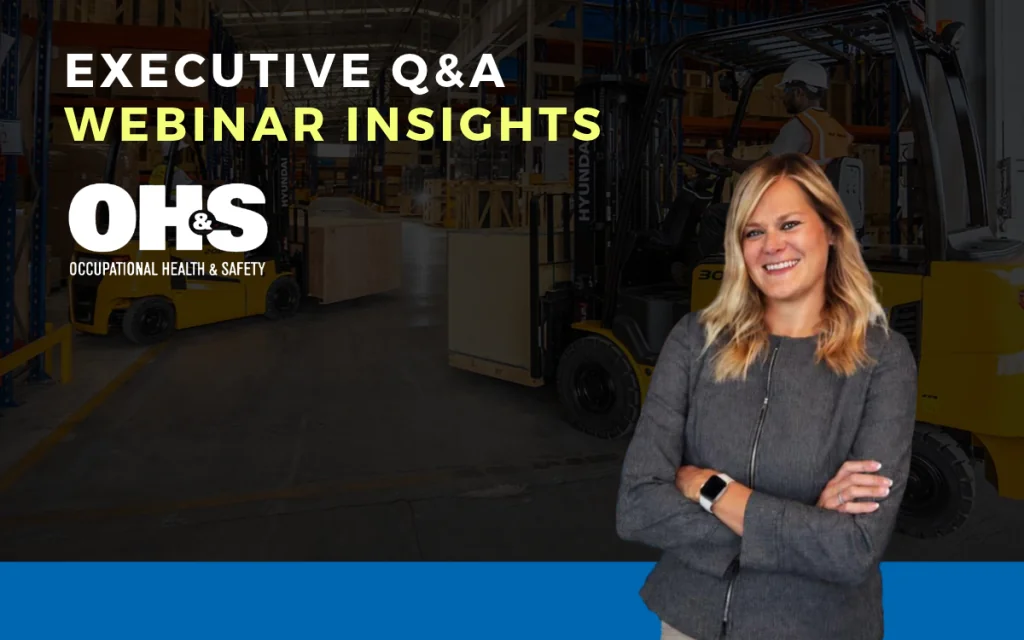
In Part 2 of Matrix Design Group’s Executive Q&A webinar series, Karly Broerman, Channel Manager at Matrix Design Group, joined David Kopf, Executive Editor of Occupational Health & Safety, to discuss how organizations can use AI-generated insights to strengthen safety programs, improve accountability, and create more proactive approaches to risk management.
Connecting Safety Data to Operational Decisions
Many organizations already have safety systems in place in some way. However, those systems often operate independently, making it difficult to see the larger picture. According to Karly Broerman, one of AI’s greatest strengths is its ability to provide context around what’s happening in an operation and help safety leaders identify patterns that may otherwise go unnoticed.
Rather than simply delivering alerts, AI can help organizations understand where risks are occurring, how often they are happening, and whether certain behaviors or processes deserve additional attention. This visibility gives leaders a stronger foundation for making informed decisions and prioritizing improvements.
Moving from Reactive to Proactive Safety
A key discussion point throughout the webinar was the difference between lagging and leading indicators.
Traditional safety metrics often focus on incidents that have already occurred. AI-enabled systems, however, can help organizations identify recurring interactions, behaviors, and risk exposures before an injury happens. While AI cannot predict accidents, it can reveal patterns that prompt earlier intervention and investigation.
During the session, Karly Broerman shared an example of a facility that consistently recorded pedestrian detections around the same forklift during a specific time each day. Data analysis revealed that the vehicle’s route intersected with high-levels of employee foot traffic. By adjusting the workflow, the organization reduced exposure and improved safety before an incident occurred.
Where AI Can Make the Biggest Impact
The conversation highlighted several areas where AI-enabled safety enhancing systems can support continuous improvement:
- Identifying recurring interactions between pedestrians and equipment before incidents occur.
- Helping safety leaders prioritize risks based on trends instead of isolated events.
- Supporting more targeted coaching and training conversations using real operational data.
- Providing visibility across departments, facilities, and workflows to strengthen decision-making.
- Helping organizations measure whether process changes are actually improving outcomes.
Rather than replacing existing safety programs, AI has the potential to strengthen them by helping organizations make better use of the information they already have.
Building Buy-In Across the Organization
While AI can provide valuable visibility into workplace risks, technology alone cannot create a safer workplace. Long-term success depends on employee trust, education, and transparency. Throughout the webinar, Karly Broerman emphasized the importance of helping employees understand why AI-enabled safety technologies are being deployed and how they contribute to risk reduction.
When teams view AI as a supportive tool rather than a surveillance tool, organizations are more likely to achieve meaningful adoption and lasting results.
Key Takeaways for Safety Leaders
As AI adoption continues to grow, organizations have an opportunity to shift their focus from simply reacting to incidents toward understanding the behaviors and conditions that create risk in the first place.
For safety leaders, the takeaway is clear:
- Start with a specific safety challenge, not the technology.
- Focus on trends and leading indicators, not just incidents.
- Use data to guide coaching, process improvements, and operational decisions.
- Build a culture where information leads to action.
Matrix will continue the conversation this year at PACK EXPO International in October 2026 at Booth #N-5285 and FABTECH in October 2026 at Booth #S39053.