Forklift-pedestrian interactions remain one of the most persistent safety challenges across industrial facilities. While training, facility design, and established safety procedures remain essential, organizations continue exploring new technologies that can help identify hazards earlier and prevent incidents before they occur.
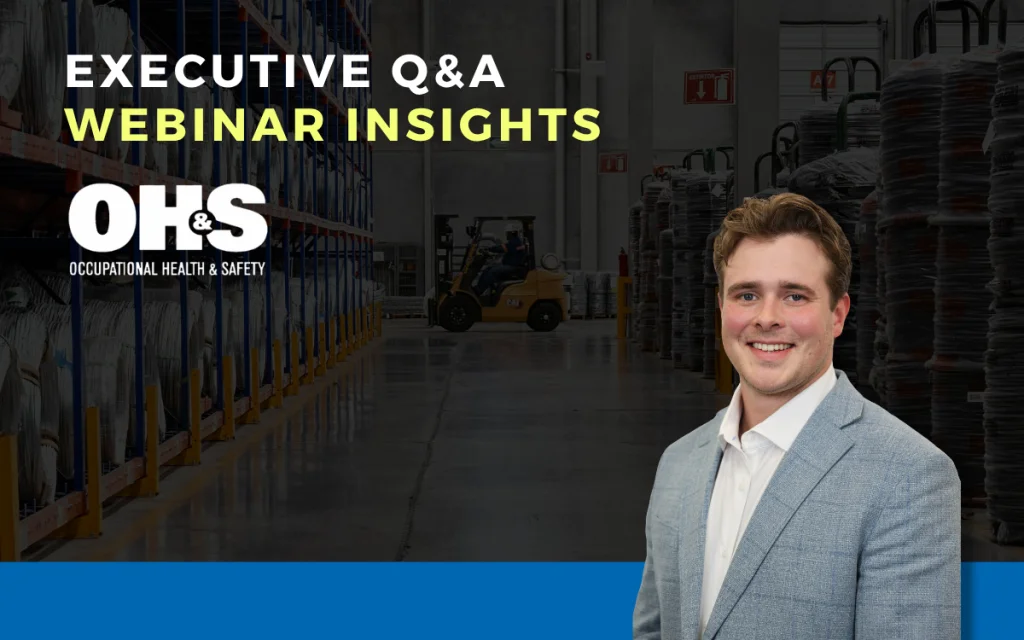
During a recent OH&S Executive Q&A webinar, Jackson Phillips, Account Manager at Matrix Design Group, discussed how AI-powered forklift safety technology improves workplace safety. He highlighted improved visibility, real-time hazard detection, and proactive risk management. Readers who would like to explore the full discussion can watch the webinar replay.
Why Traditional Safety Efforts Aren’t Always Enough
Many facilities have invested heavily in operator training, pedestrian awareness programs, signage, and traffic management procedures. However, blind corners, obstructed views, congested work areas, and constant operational movement can still create opportunities for near misses and serious incidents.
AI-powered safety systems are designed to supplement existing safety practices by helping operators identify potential hazards before they become incidents. By providing an additional layer of awareness, organizations can better protect both equipment operators and pedestrians working in high-traffic environments.
Interest in connected worker and proximity detection technology extended across the industries represented at the booth, including warehousing, heavy industrial environments, and underground mining operations. Many attendees also emphasized the need for better visibility into near misses. These events often go untracked, yet they can reveal emerging hazards before a recordable incident occurs.
Using AI to Improve Forklift and Pedestrian Awareness
Modern forklift safety solutions leverage artificial intelligence to detect people, vehicles, and potential obstacles within the operating environment. These systems provide real-time alerts that help operators maintain situational awareness and make safer decisions while navigating busy facilities.
Organizations can use AI-powered technology to identify risks before an accident occurs. They can also address hazardous interactions before they lead to incidents. This shift from reaction to prevention is driving increased interest in intelligent safety solutions across industrial operations.
Moving From Interest to Implementation
The audience discussion highlighted several important implementation concerns. Attendees focused on practical implementation questions rather than theoretical AI applications. Topics included whether AI-powered safety systems could be installed on older forklifts, how solutions work across mixed fleets, what operational data is collected, and how organizations measure success after deployment.
Organizations evaluating AI-powered forklift safety are increasingly focused on practical deployment considerations. Common topics include fleet compatibility, performance validation, workforce adoption, operational data, and long-term scalability. These considerations show how the industry is moving beyond awareness. Organizations now want to understand how AI fits into existing safety programs.
Building Adoption Through Safety Culture
Technology is only one part of a successful safety program.
Jackson Phillips noted that organizations achieve the best results when operators, supervisors, and safety leaders participate throughout the implementation process. Communicating the purpose of the technology, improving understanding of its capabilities, and emphasizing employee protection can help drive acceptance and long-term success.
Facilities that involve front-line personnel early often gain valuable insight into operational challenges and high-risk areas. Those insights can improve deployment outcomes.
Turning Awareness Into Action
AI-powered forklift safety is no longer a future concept. Organizations across manufacturing, warehousing, distribution, and industrial operations are actively evaluating how intelligent safety technologies can reduce risk, improve workplace awareness, and support proactive safety initiatives.
The discussion highlighted a simple takeaway. Successful implementations combine technology, process, and people. Organizations should define safety objectives early. They should also involve operators and establish measurable success criteria. These steps help build sustainable safety programs that protect employees and operations.
Interested in learning more? Watch the full OH&S Executive Q&A webinar, Putting AI-Powered Forklift Safety Into Practice, to hear additional insights on implementation strategies, operator adoption, equipment compatibility, and practical approaches to reducing forklift-pedestrian risks.
Stay tuned for Part 2 of the OH&S Executive Q&A series, where Karly Broerman will explore how organizations can leverage AI beyond individual safety applications to build stronger, more proactive workplace safety programs. Learn more and register here: Using AI to Build Safety Programs.